Hugost: A Script Font for Web Design
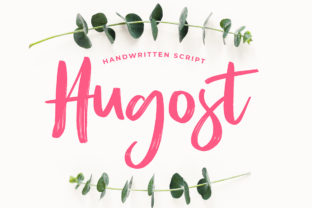
As a web designer, I'm always on the lookout for fonts that bring personality to a site without sacrificing usability. Hugost is one of those rare finds—a script font that feels fresh, authentic, and incredibly cute. It’s perfect for adding a touch of charm to digital projects without overwhelming the design.
First Impressions on a Landing Page
I first tested Hugost on a landing page for a boutique online store. The hero section needed a strong, eye-catching headline that would stand out against a background image. Hugost’s flowing curves and soft edges gave the text a warm, inviting feel that complemented the brand’s aesthetic. It felt like the font was designed with this kind of use in mind—clean enough for digital environments but expressive enough to make an impression.
On mobile screens, Hugost held up well. The letterforms didn’t get lost in small sizes, and the spacing allowed for easy reading even on tighter layouts. I found it especially effective when used in combination with a simple sans serif for body text, creating a balanced visual hierarchy that guided the user’s eye naturally.
Using Hugost in Headers and CTAs
One of the most powerful uses of Hugost is in headers and call-to-action buttons. On a product landing page, I placed the font over a bold image banner, and it added just the right amount of flair without competing with the visuals. It worked well as a heading for a course sales page, where it brought a personal, approachable tone to the content.
For CTA buttons, Hugost added a unique touch that made the action feel more intentional. It wasn’t too ornate, so it still maintained a professional edge while standing out from standard fonts. Pairing it with a clean, modern sans serif helped keep the design cohesive and easy to navigate.
Responsive Design and Accessibility
When testing Hugost on different screen sizes, I noticed that it scaled well. On desktop, it looked elegant and refined, while on mobile, it remained readable and visually appealing. The font’s weight and spacing made it suitable for responsive layouts, which is a big plus for designers working on multi-device experiences.
However, I wouldn’t recommend using Hugost for long paragraphs or dense blocks of text. Its decorative nature makes it better suited for short phrases, headings, or decorative accents. For accessibility, it’s best to pair it with a more neutral font for body copy, ensuring that all users can easily engage with the content.
Brand Identity and Digital Assets
Hugost has potential beyond just website headers. I used it in a digital brand kit for a creative business, where it served as a key element in logo design and social media graphics. It brought a sense of authenticity and creativity that aligned with the brand’s values. The font’s versatility made it easy to incorporate into multiple assets without feeling forced or inconsistent.
For a portfolio homepage, Hugost worked well as a title font, giving the site a personal and artistic feel. It also paired nicely with a serif font for subheadings, creating a layered look that felt both modern and timeless. The font’s ability to adapt to different contexts made it a valuable addition to my design toolkit.
Font Pairing and Webfont Availability
When working with Hugost, I found that pairing it with a simple sans serif or serif font created the best results. A clean, geometric sans serif like Montserrat or Poppins provided a nice contrast, making the script font stand out without clashing. For editorial-style designs, a classic serif like Georgia or Playfair Display added depth and sophistication.
Before integrating Hugost into a project, I checked its webfont availability and file formats. It was available in WOFF and WOFF2, which are ideal for fast-loading websites. The font also included multiple weights and alternates, giving me flexibility in how I used it across different sections of the site.
Final Thoughts on Hugost
Overall, Hugost is a standout script font that brings a fresh and authentic vibe to web design. It’s ideal for headers, CTAs, logos, and other display elements where a personal touch is needed. While it may not be the best choice for long-form content, its charm and readability make it a great asset for any designer looking to add character to their digital work.
If you're working on a creative portfolio, an online store, or a branding project, Hugost is definitely worth considering. It’s a font that feels like it was made for makers and digital creators who want to elevate their online presence with a touch of personality and style.